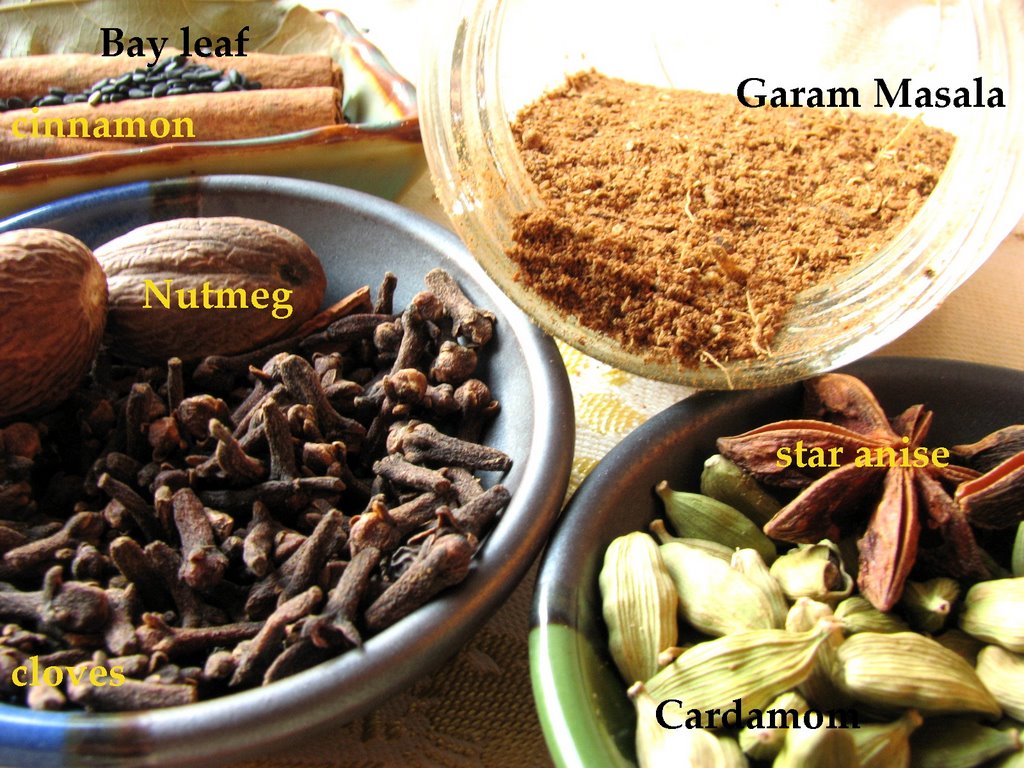
Every household has its distinctive spice mixes and when Habeas Brulee, the must see site for great photos and recipes, announced the theme of the Spice is Right VII as Seasons of love-spices and spice mixes, the first thought I had was this Mix which is also my mom's Biryani Garam Masala.
This is one of the spice mixes that I associate with the smells of my mom’s kitchen and the aroma of her cooking. If I do not have it on hand, I feel my kitchen is incomplete. For a long time, I did not trust myself to make the mix here, so had to have it roasted and powdered by my mom and sent to me via any friend traveling to Kerala. Then during her last visit, she made me learn it and make it under her guidance. (But I still make her sent it from home.)
So what is Biryani Masala? Is it the same as curry powder? No. It is a blend of whole spices lightly roasted to release its aromas and then powdered. The name comes from the hindi term "Garam Masala" which translates as “hot spices” and the term is used generally for whole spices. It is not spicy but has a pungency which if used carelessly can overpower the dish. It stays well in an air tight container for months, but if freshly ground, is a whole new experience. Then you only need a pinch to make a difference. It is similar to comparing fresh ground coffee made from beans and stored powdered beans.
Uses are only limited by your imagination. The main purpose of its being is Biryani, Rice layered and cooked with meat or fish or vegetables and baked to infuse the flavors together. Furthermore, we use a dash for any spicy Goat or Lamb curry, Chicken curry, where it holds its own and even comes out boldly against the strong chili powders and coriander smells. The gamut of the curries runs from the dry Beef Fry to Goat Stew. Adding a pinch in vegetable stew or Pilaf/pulav gives it richness beyond its humble vegetables. It is little different from the store bought garam masala as it does not have cumin, ginger, mustard etc in it.
Mixed with lemon juice,salt, olive oil, garlic powder and pepper, it is an excellent marinade for beef and lamb chops giving it a semi mediterranean flavor. The recipe for the grilled beef is explained in my post on Grilled Beef Gyros.
Lastly but not the least, I use a teaspoonful to spice up my Banana Nut Muffins and Carrot-Date Cake instead of powdering nutmeg and cardamom. It cuts the smell of the eggs without the overpowering taste of the vanilla.
Biryani Masala:
Cinnamon(Karopatta)- 2 inch piece
Cardamom 8
Cloves(Karambu)8-10
Nutmeg (Jathika)-1/8 of a whole piece
Bay leaves- 1
Fennel seeds- 1tsp
Mace( Javithri/Jathipathri) 5-6
Caraway seeds/Shah Jeera- 1 tbsp
Star Anise-1
Dry roast all together and grind to a fine powder. Store in a tight lidded bottle and use only sparingly. This will yield 3 tbsp.
To roast, I usually use a cast iron skillet which holds the heat well without burning the spices. Keep the flame on medium heat, roast one ingredient at a time and keep stirring to distribute the heat evenly. This takes about 4-5 minutes.
Alternately, roast in the oven at 300 degrees for 5-10 minutes depending on tyhe quantity and size of oven.


